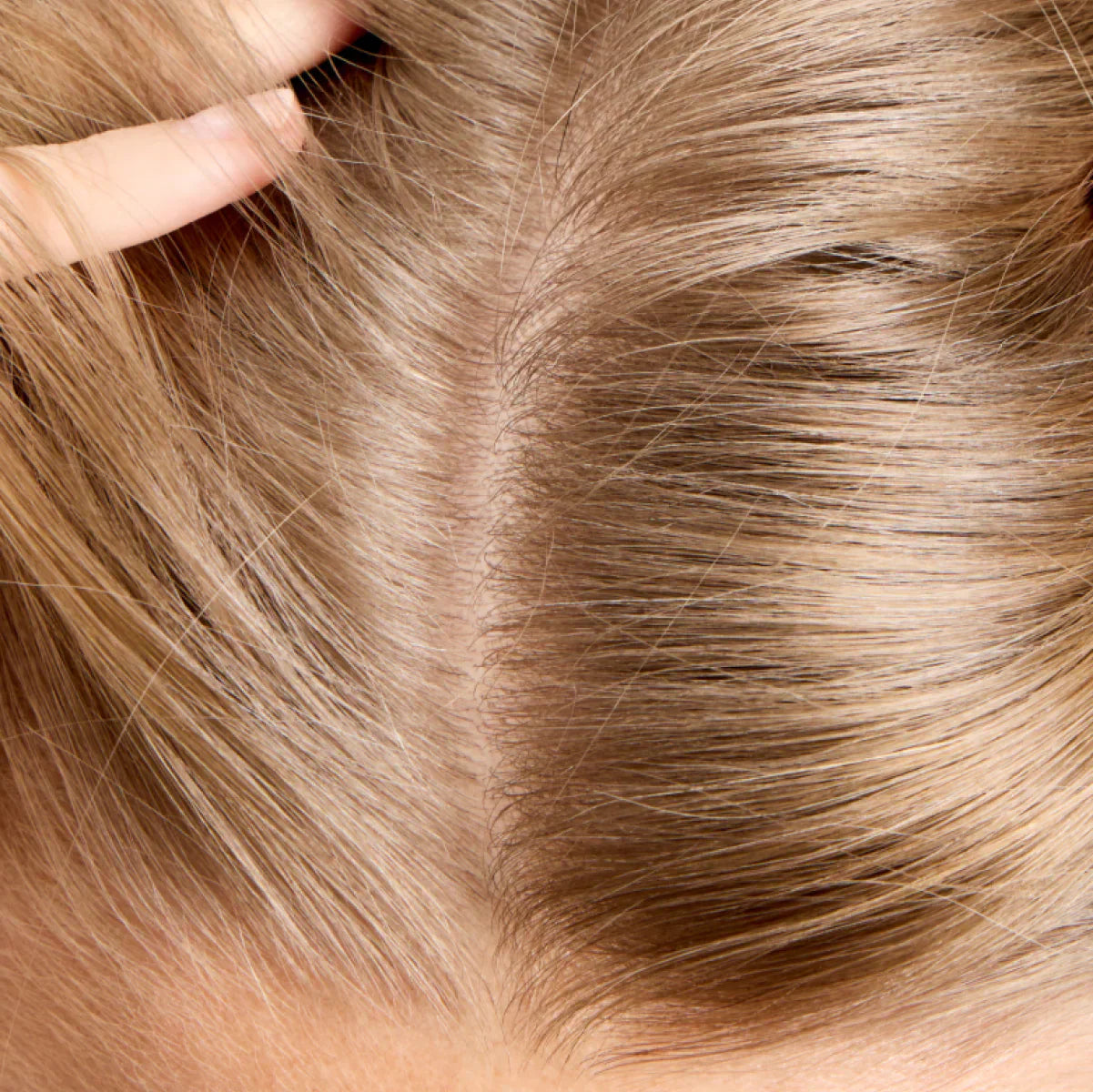

Purple shampoo is a toning shampoo that deposits violet pigments onto hair to neutralise unwanted yellow and brassy tones. It works using complementary colour theory - purple sits opposite yellow on the colour wheel, so the pigments cancel out warm, golden discolouration. Blonde and grey hair benefit most. Most people reach for it to keep their colour looking cool-toned and fresh between salon visits.
Simple enough in theory. But the way people use purple shampoo in practice - how often, how long to leave it on, whether it's doing anything on their specific hair - that's where things get muddled. The internet is full of conflicting advice. Some people swear by daily use. Others say once a month. The right frequency depends on your hair colour and porosity, plus what kind of brassiness you're dealing with.
Ethique's Purple Shampoo Bar uses the same violet pigment technology in a concentrated, plastic-free solid format - formulated specifically for blonde and grey hair. More on that below, but first: the colour science that makes all of this work.

The colour wheel explanation (yes, it matters for your hair)
Every colour has a complementary colour - the one sitting directly across from it on the colour wheel. Mix complementary colours together and they neutralise each other. Red cancels green. Blue cancels orange. Purple cancels yellow.
That's the entire mechanism behind purple shampoo. Violet pigments land on the hair shaft, sit on the surface, and visually counteract yellow tones. Not a chemical reaction. Not a dye. Optics.
You might remember this from elementary school art class. Complementary colours was one of those concepts that seemed irrelevant at the time. Turns out it's the foundation of an entire category of hair products.
The reason brassiness happens in the first place comes down to underlying pigment. Every hair colour - natural or dyed - has warm pigments layered underneath the visible shade. When colour fades from UV exposure, washing, hard water, or just time, those underlying warm tones start surfacing. Blonde hair pulls yellow. Brunette hair pulls orange. Grey hair picks up environmental yellowing from mineral deposits in shower water and pollution.
How purple shampoo works on your hair
The violet pigments in purple shampoo are small enough to deposit on the hair's surface but don't penetrate deeply into the cortex. They sit on the outer cuticle layer and create a colour-correcting filter over the strand.
Think of it like a translucent overlay. You're not removing the yellow - you're laying a sheer purple tone over it. The two colours meet and the result reads as neutral to the eye. Cool-toned instead of warm.
How much toning you get depends on a few things:
-
Pigment concentration in the formula. Some purple shampoos are deeply pigmented (almost black-purple in the bottle). Others are pale lavender. Darker formulas deposit more pigment per wash.
-
How long you leave it on. Longer contact time means more pigment deposits. Two minutes gives subtle toning. Five minutes gives a more noticeable shift.
-
Your hair's porosity. Porous hair - whether from bleaching, heat damage, or naturally high porosity - absorbs pigment faster and holds more of it. Less porous hair takes longer to tone.
-
Your starting colour. Very pale blonde and white hair show results quickly (sometimes too quickly). Darker blondes or light brunettes need longer exposure for the same visible effect.
The toning is temporary. It washes out gradually over your next few shampoos with a regular (non-purple) cleanser. That's by design - it gives you control over how much toning you maintain.
Who should use purple shampoo (and who shouldn't bother)
Purple shampoo works on any hair that's developing unwanted yellow warmth. That covers a wider range of people than most product labels suggest.
Colour-treated blondes are the obvious audience. Highlights, balayage, platinum all-over colour, partial foils - any lightened hair will eventually pull warm as the toner fades. Purple shampoo extends the time between salon visits by maintaining that cooler tone at home.
Natural blondes sometimes need it too, especially if hard water or sun exposure has shifted their colour warmer over time. It's not just for dyed hair.
Grey and silver hair benefits more than most people realise. Grey hair is essentially transparent - it lacks melanin, which means it picks up environmental discolouration readily. Mineral buildup from hard water and residue from styling products can leave grey hair looking dull and yellowish. Purple shampoo clears that cast and brings back the cool, clean silver tone.
Who shouldn't use it? Brunettes with orange brassiness. Purple targets yellow tones specifically. If your hair is pulling coppery or orange, you need blue shampoo - different pigment, different position on the colour wheel. We cover the distinction in detail in our blue vs purple shampoo guide.
Ethique's Purple Shampoo Bar: toning without the plastic
If your blonde or grey hair is pulling yellow and you want a purple shampoo that doesn't come in a plastic bottle, Ethique's Purple Shampoo Bar deposits violet pigments to neutralise brassy, yellow tones in lighter hair. It's a concentrated solid bar - the same toning mechanism as liquid purple shampoo, just without the water and packaging waste. Dermatologist-tested, suitable for colour-treated hair, vegan, cruelty-free, palm oil-free, and certified B Corp.
The concentrated format means the bar lasts longer than a typical bottle of liquid purple shampoo. And because it's solid, there are no liquid restrictions for travel. No leaky caps.
For extra toning and conditioning in one step, pair it with the Purple Conditioner Bar. The conditioner continues the violet pigment deposit while adding moisture - which matters, because lightened and grey hair tends to lean dry. Using both extends the toning effect and keeps hair from feeling stripped.
Ethique's Purple Shampoo Bar and Purple Conditioner Bar are formulated for grey and blonde hair. Both are dermatologist-tested and suitable for colour-treated hair.
How often should you use purple shampoo?
Not every wash. That's the short answer.
Once or twice a week is the standard recommendation, and it holds up for most people. Purple shampoo is a maintenance tool. Using it daily risks depositing too much pigment - which shows up as a noticeable purple or violet cast on your hair. Especially on very light or porous hair.
The right frequency varies based on your situation:
Freshly toned hair from the salon? You probably don't need purple shampoo for the first week or two. The professional toner is doing the heavy lifting. Introducing purple shampoo too early can over-tone and push your colour cooler than intended.
Two or three weeks out from a colour appointment is when purple shampoo earns its place. Warmth starts creeping in around that point for most people. Once a week to start. Twice if the yellowing is more noticeable.
Grey hair that isn't coloured at all usually needs purple shampoo about once a week to counteract environmental yellowing. Some people with very hard water find they need it twice a week. Pay attention to your shower water - if it leaves mineral residue on your glass doors, it's doing something similar to your hair.
On your non-purple wash days, use a gentle, colour-safe shampoo to cleanse without stripping the toning you've built up.
Getting the most out of each wash
Wet your hair thoroughly. Lather the purple shampoo between your hands or directly onto wet hair (if using a bar, rub it between your palms first to build a lather). Work it through from roots to ends.
Leave it on for two to five minutes. Start at two. If that's not giving you enough toning after a couple of washes, extend to three or four minutes. Very porous hair may need less time, not more - it grabs pigment fast.
Rinse thoroughly. Follow with conditioner. If you're using the Purple Conditioner Bar, you're getting a second round of violet pigment, which means you can keep the shampoo contact time shorter.
One thing that catches people off guard: the lather will be purple. Your hands might be slightly purple. Your shower might get purple streaks. All normal. Rinses off surfaces easily.
Where people go wrong
Leaving it on too long. More time doesn't always mean better results. On porous hair, ten or fifteen minutes can leave a visible purple cast. Temporary, yes - but not the look most people are going for. Two to five minutes. That's the window.
Using it as their only shampoo. Purple shampoo is a toning treatment, not an everyday cleanser. It doesn't replace your regular shampoo. Alternate between the two. Think of purple shampoo as something you rotate in, not something you switch to permanently.
Expecting it to lighten hair. Purple shampoo neutralises warmth. It doesn't bleach or lighten. If your hair is significantly darker than you want it, a toning shampoo isn't going to get you there. That's a salon conversation.
Using purple when they need blue. This one's more common than you'd expect. If your brassiness is orange rather than yellow - typical for brunettes or dark hair that's been lightened - purple shampoo is the wrong tool. Blue pigments cancel orange. Purple pigments cancel yellow. Colour wheel, again.
Purple shampoo across different hair types
Curly and coily hair textures are often more porous, which means they absorb violet pigments faster. If you have curly blonde or grey hair, start with a shorter contact time - one to two minutes - and see how your hair responds before extending. Overly porous curls can grab too much pigment unevenly.
Fine hair can feel weighed down by heavy formulas. A concentrated bar format tends to work well here because you control exactly how much product you're applying. Less product, more targeted application. Thick, coarse hair usually needs a bit more lather and slightly longer contact time to get even coverage.
Straight hair distributes product easily, so application is straightforward. The main watch-out for straight, fine hair is over-toning at the ends - they're older, more porous, and grab pigment faster than the roots. Apply to roots first, then work down toward ends in the last minute of contact time.
Hard water, UV, and other things yellowing your hair
Brassiness doesn't only come from colour fading. Environmental factors play a significant role, especially for grey and silver hair that isn't colour-treated at all.
Hard water leaves mineral deposits - primarily calcium and magnesium - on the hair shaft. These minerals build up over time and can give hair a yellowish, dull appearance. A study published in the International Journal of Dermatology (Srinivasan and Rangachari, 2016) found that hair washed in hard water showed increased roughness and mineral deposition compared to soft water.
UV exposure breaks down melanin and can accelerate colour fade in both natural and dyed hair. Even grey hair, which lacks melanin, can develop a yellowish tone from prolonged sun exposure through photo-oxidation of the hair protein.
A clarifying shampoo - like Ethique's Clarifying Shampoo Bar - helps remove mineral buildup periodically. Purple shampoo then handles the colour correction. The two serve different purposes. Using a clarifying wash once or twice a month before your purple shampoo can make the toning more effective, because the pigments deposit more evenly on clean, buildup-free hair.

FAQ
Does purple shampoo work on natural hair that isn't dyed?
Yes. Natural blondes, natural greys, and anyone with lighter hair that's developed yellow tones can benefit. Toning pigments respond to the colour of your hair, not whether it's been chemically treated.
Can purple shampoo damage my hair?
Purple shampoo itself doesn't cause damage - the pigments sit on the surface and wash out over time. However, some formulas contain sulfates or drying surfactants that can be harsh on already-processed hair. Look for a formula that's gentle enough for colour-treated hair. Ethique's Purple Shampoo Bar is dermatologist-tested and suitable for colour-treated hair.
How do I know if I need purple or blue shampoo?
Look at your brassiness in natural daylight. If it's yellow or golden, you need purple. If it's orange or copper, you need blue. Your natural hair colour is a clue too - blondes and greys almost always need purple; brunettes who've lightened their hair usually need blue. Our full comparison walks through the differences.
Will purple shampoo turn my hair purple?
Only if you leave it on too long or use it too frequently on very porous hair. A visible purple cast is temporary and fades within a wash or two with regular shampoo. Keeping contact time between two and five minutes prevents this for most people.
Can I use purple shampoo and purple conditioner together?
You can, and many people find it gives a more thorough tone. The shampoo deposits pigment during cleansing, and the conditioner adds a second layer while moisturising. If you're new to purple products, you might start with the shampoo alone and add the conditioner once you know how your hair responds to the toning.
Is a purple shampoo bar as effective as liquid?
Same active pigments, different delivery. Ethique's Purple Shampoo Bar uses the same violet pigment mechanism as liquid formulas. The bar is more concentrated - no water filler - so a small amount of lather goes a long way. If you're curious about how bars compare to liquid formulas more broadly, Ethique covers that in their shampoo bar guide.
Keeping it simple
Purple shampoo neutralises yellow brassiness. That's what it does. The colour science is sound and the mechanism is straightforward. Most people see visible results within a wash or two.
The only variables that matter are your hair colour and your porosity. Start with once a week, two to five minutes of contact time, and adjust from there. If you're going grey and wondering why your silver looks dingy - start there too. Environmental yellowing is real, and purple shampoo is one of the simplest ways to handle it.
For a plastic-free option that's specifically formulated for blonde and grey hair, Ethique's Purple Shampoo Bar and Purple Conditioner Bar are worth looking at. Same toning science in a concentrated bar format - no packaging waste.
SOURCES
Srinivasan G, Chakravarthy Rangachari S. "Scanning electron microscopy of hair treated in hard water." International Journal of Dermatology. 2016. https://pubmed.ncbi.nlm.nih.gov/26711619/