
Shampoo for postpartum hair loss cannot stop the shedding. No shampoo can - postpartum hair loss is hormonally driven, not caused by what you wash with. But the right shampoo can support hair that is already under stress and reduce breakage during a fragile period. Gentle, strengthening formulas with clean ingredients give postpartum hair what it needs without adding irritation to a scalp that may already be sensitive.
If you are three or four months postpartum and pulling clumps from the shower drain, you are not imagining it. You are not doing anything wrong. A cross-sectional study in the International Journal of Women's Dermatology (Hirose et al., 2023) found that over 91% of respondents experienced postpartum hair loss. It typically starts around three months after delivery and peaks near five months. Most people see normal thickness return by eight to twelve months.
That timeline matters. Once you understand what is happening and roughly how long it lasts, choosing products becomes less about panic and more about practical support.
What is happening to your hair (and why)
During pregnancy, elevated oestrogen levels keep hair in its growth phase (anagen) for longer than usual. Fewer hairs fall out. Many people notice their hair feeling thicker and fuller during the second and third trimesters. That is not new growth - it is old growth sticking around longer than it normally would.
After delivery, oestrogen drops sharply. All those hairs that overstayed their welcome shift into the resting phase (telogen) at once, then shed together two to four months later. The medical term is telogen effluvium. A reference review on StatPearls (Hughes et al., 2024) explains that under hormonal stress, up to 70% of hair can shift prematurely from the growth phase into shedding - compared to the usual 10-15% at any given time. That is why it looks alarming. But it is temporary. Your follicles are not damaged. They are resetting.
The timeline most people experience
Onset is typically around two to three months postpartum. This catches people off guard because it does not start immediately after birth. The delay is built into the hair cycle - it takes roughly three months for hairs that have entered the resting phase to release from the follicle.
Peak shedding tends to fall around four to five months. This is usually the point where people start searching for products, because the drain, the brush, the pillow - everything suddenly has hair on it. Stressful. Normal.
By six to eight months, shedding typically slows. New growth becomes visible - short hairs sprouting along the hairline and part line, sometimes sticking straight up. Awkward but encouraging. Full recovery to pre-pregnancy thickness generally happens somewhere between eight and twelve months postpartum, though this varies. Breastfeeding can extend the timeline somewhat, as hormone levels stabilise more gradually.
So can a shampoo do anything?
Honestly? No ingredient reverses telogen effluvium. The shedding is driven by a hormonal shift that has already happened, and it runs its course regardless of what you lather with.
Where shampoo matters is in protecting the hair you still have. During postpartum shedding, remaining hair is often finer than usual and more prone to breakage. Strands that snap mid-shaft look like more hair loss, but they are really breakage disguised as shedding. The difference matters, because breakage is something you can address. Our guide on how to stop hair breakage covers this in detail.
A good postpartum shampoo should do three things: clean gently without stripping, strengthen hair that is already weakened, and avoid ingredients that might irritate a sensitive postpartum scalp. That last point matters more to new parents than most brands acknowledge.
It also helps to know what you are seeing in the shower. Clumps in the drain are alarming, but if the hair has a white bulb at the root end, that is a telogen hair that completed its cycle and released naturally. Breakage looks different - shorter pieces without a bulb, snapped partway down the strand. The first kind you cannot prevent right now. The second kind is where your shampoo choice actually matters.
What to look for in a postpartum shampoo
Gentle cleansing comes first. Harsh sulfates strip natural oils from the scalp and hair shaft, which leaves already-fragile postpartum hair more vulnerable to breakage. Sulfate-free formulas clean effectively without that aggressive stripping action.
Strengthening ingredients help reinforce the hair you have. Protein-based ingredients - hydrolyzed quinoa, rice protein, biotin - can temporarily patch weakened spots along the hair shaft and improve tensile strength. Rosemary extract is worth noting too. A randomised trial published in SKINmed (Panahi et al., 2015) found rosemary oil performed comparably to minoxidil 2% for hair regrowth over six months, with fewer side effects. That study looked at androgenetic alopecia rather than postpartum hair loss specifically, but the mechanism - stimulating blood circulation to the follicle - is relevant regardless of cause.
Clean, minimal ingredient lists matter to a lot of new parents. You are holding a baby against your chest and neck all day. Whatever is on your hair and skin is in close proximity to your newborn. Fragrance-free and naturally derived formulas reduce the number of synthetic compounds both of you are exposed to.
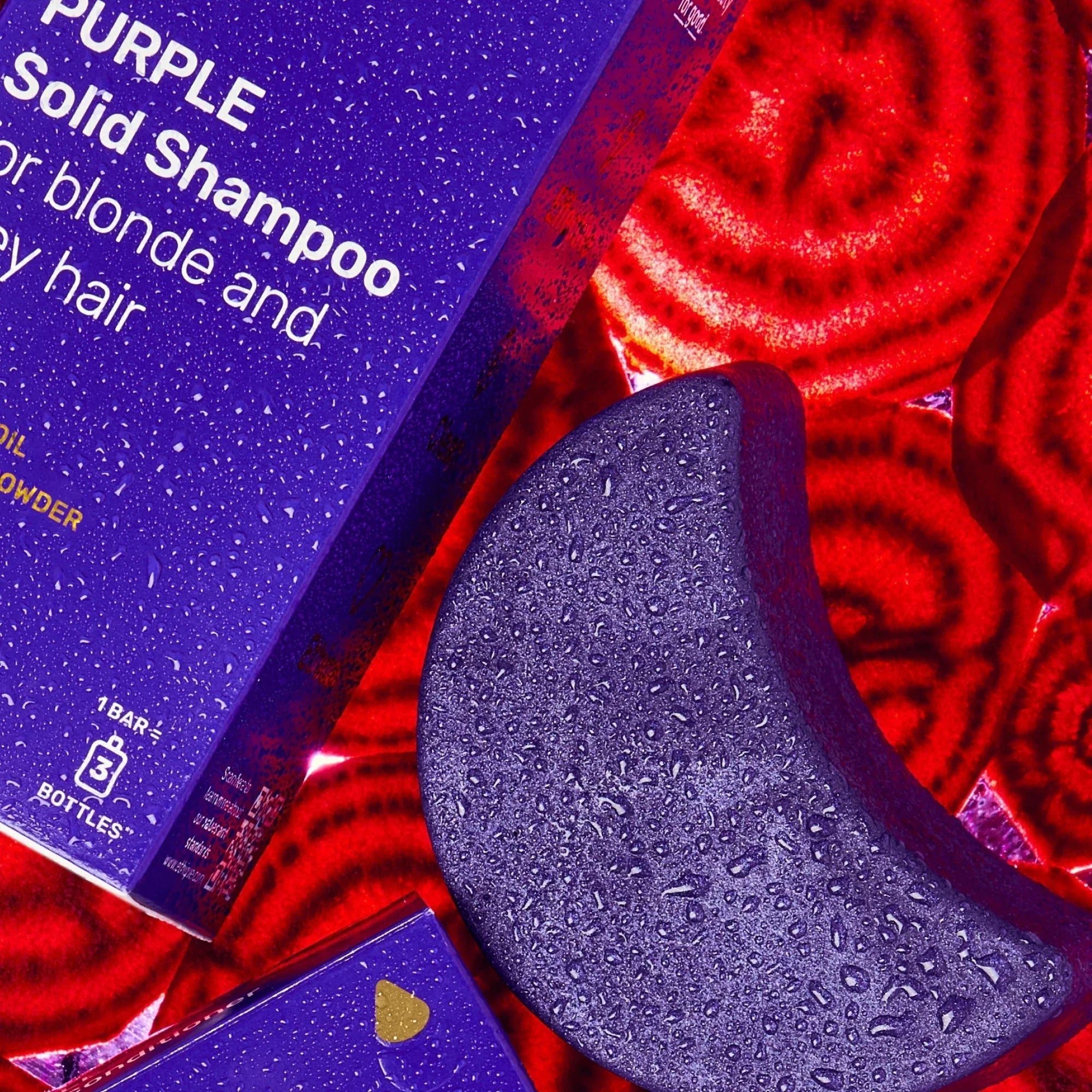
Ethique's STRENGTHENING Shampoo Bar for postpartum hair
For postpartum hair that feels thin, weak, or breakage-prone, Ethique's STRENGTHENING Shampoo Bar contains rosemary extract, biotin, hydrolyzed quinoa, and peppermint oil. Clinical testing shows 3X stronger hair after one use and a 70% reduction in breakage. It also delivers 3X immediate volume increase (205%) that holds - still 3X after eight hours. That volume boost is particularly relevant postpartum, when hair can feel noticeably flat and sparse.
*Clinical testing on STRENGTHENING Solid Shampoo.

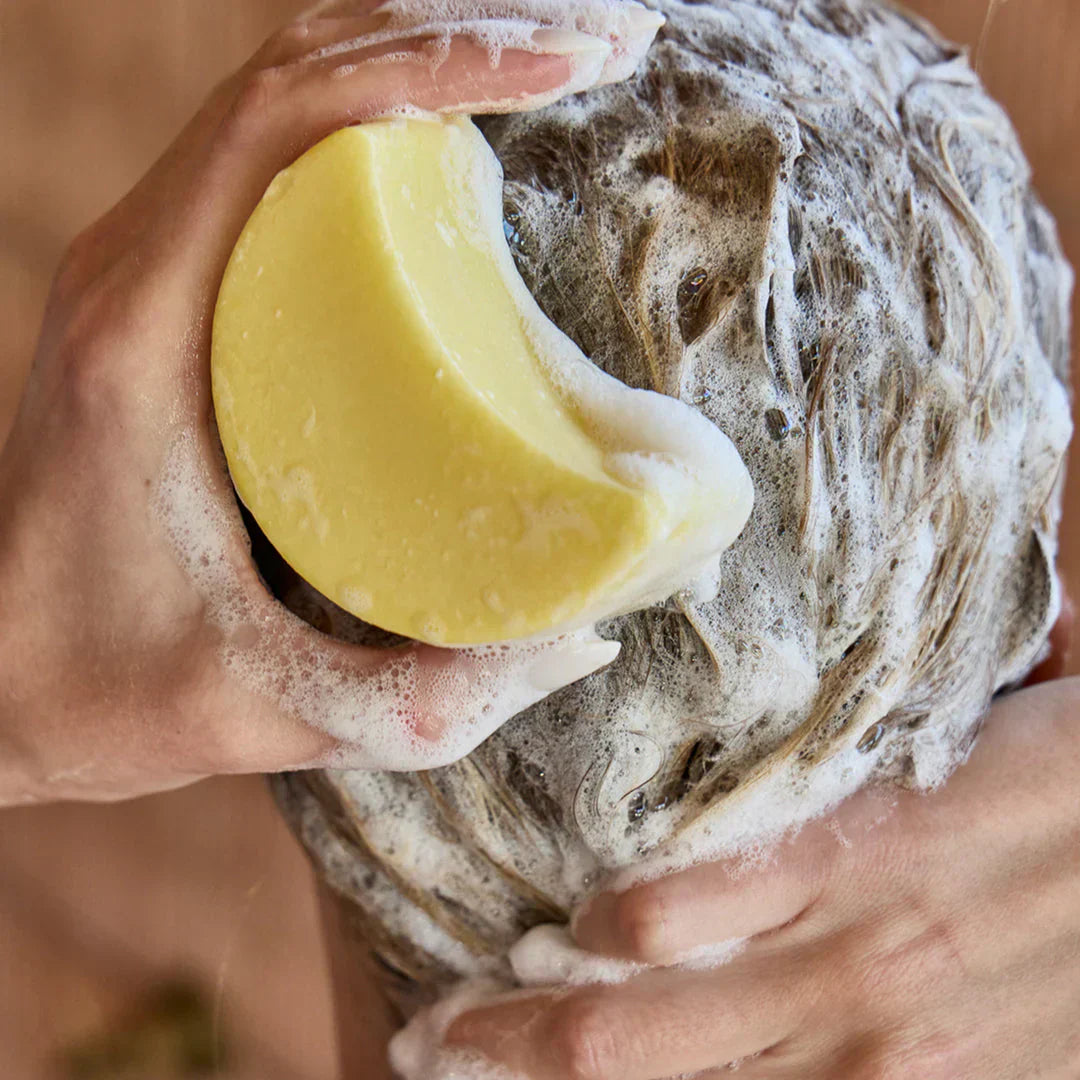
The bar format is concentrated and plastic-free - no bottle to deal with when you are showering with one hand while listening for the baby monitor. Dermatologist-tested, suitable for colour-treated hair, vegan, cruelty-free, palm oil-free, and certified B Corp.
The peppermint oil in the formula supports blood circulation to the scalp, and it wakes you up. Worth mentioning when sleep is in short supply.
When fragrance-free is non-negotiable
Some postpartum parents develop heightened sensitivity to scent - whether from hormonal shifts, general sensory overload, or a conscious choice to reduce chemical exposure around their newborn. If that sounds familiar, a fragranced shampoo might not work for you right now, regardless of how effective the ingredients are.
Ethique's Gentle Shampoo Bar is formulated without any added fragrance compounds, essential oils, or masking scents. No parfum on the label, no hidden fragrance blends. Dermatologist-tested and suitable for colour-treated hair. Pair it with the Gentle Conditioner Bar for a complete wash routine that keeps unnecessary chemicals away from both you and your baby.

Both the STRENGTHENING and GENTLE ranges are solid bars, which means no liquid leaking in a nappy bag if you are showering at someone else's house (or, honestly, wherever you can get a shower in those early weeks). Small practical detail. Surprisingly relevant.
Habits that make postpartum shedding worse
Tight ponytails and high buns put tension on hair that is already loosely anchored in the follicle. If you are tying your hair back constantly (understandable with a baby grabbing at everything), use soft scrunchies and keep styles loose. Traction on weakened hair accelerates loss from the hairline and temples.
Over-washing strips the natural oils that protect fragile strands. Every two to three days is a reasonable frequency for most postpartum hair. If your scalp feels oily between washes, a dry shampoo can bridge the gap without the mechanical stress of a full wash.
Aggressive brushing - especially on wet hair - causes breakage that mimics shedding. A wide-toothed comb, starting from the ends and working upward, is gentler. Patience helps. Yanking through tangles creates exactly the kind of mid-shaft snapping that makes hair loss look worse than it is.
And social media "miracle" products? Be cautious. No topical product reverses telogen effluvium. Any brand claiming their shampoo stops postpartum hair loss is overpromising. What a shampoo can do is reduce breakage, support scalp health, and create better conditions for regrowth. That is genuinely helpful. It is just not a reversal of what hormones set in motion.
Beyond the shower
A balanced diet supports hair regrowth from the inside. Iron, zinc, biotin, omega-3 fatty acids, and adequate protein all contribute to healthy hair growth. Postpartum nutritional demands are high, especially while breastfeeding, so nutrient deficiencies can compound what the hormonal shift already started.
If shedding feels excessive or continues well beyond twelve months, a conversation with your doctor is worth having. Thyroid dysfunction, iron-deficiency anaemia, and other conditions can mimic or extend telogen effluvium. Persistent shedding is not always "just postpartum."
Scalp massage is a low-effort habit that some people find helpful. A 2016 study in *Eplasty* (Koyama et al.) found that four minutes of daily scalp massage over 24 weeks increased hair thickness by roughly 10%. Small gains, but the barrier to entry is essentially zero - you can do it while sitting on the floor watching your baby play.
FAQ
Is postpartum hair loss permanent?
No. Telogen effluvium is temporary. Hair follicles are not damaged during postpartum shedding - they are just cycling through the resting phase simultaneously. For most people, normal hair density returns within eight to twelve months.
When should I start using a strengthening shampoo?
There is no wrong time. Some people switch to a strengthening formula as soon as shedding begins (around three months postpartum). Others wait until they notice breakage or thinning becoming more visible. Either approach is reasonable. The earlier you reduce breakage, the less hair you lose to snapping versus actual shedding.
Does breastfeeding affect postpartum hair loss?
It can extend the timeline. Breastfeeding maintains certain hormone levels that delay the full normalisation of the hair cycle. The Hirose et al. (2023) study found breastfeeding duration was an independent predictor of more prolonged shedding. This does not mean you should stop breastfeeding - it just means the timeline for regrowth may be longer than eight months.
Are shampoo bars safe to use postpartum?
Yes. Ethique's bars are dermatologist-tested and formulated without the common irritants that can bother a sensitive postpartum scalp. The solid format is practical for new parents - concentrated, long-lasting, no bottles to juggle. If you are curious about whether shampoo bars cause hair loss, Ethique addresses that question directly.
Can I use both STRENGTHENING and GENTLE?
You can alternate. Use the STRENGTHENING bar when your hair feels particularly fragile or flat, and the GENTLE bar when your scalp is sensitive or you want to keep things completely fragrance-free. Some people use STRENGTHENING on their main wash day and GENTLE for in-between washes. There is no strict rule here - listen to what your hair and scalp need that week.
Supporting your hair through a temporary phase
Postpartum hair loss is one of those things that feels permanent while you are in it. It is not. Your body did something extraordinary, and your hair cycle is recalibrating.
The right shampoo will not make the shedding stop. But it can reduce breakage, keep your scalp comfortable, and help new growth come in with better structural integrity. That is what a good postpartum shampoo does - it supports, rather than promises a reversal that is not possible from a bottle.
If clean ingredients and a simplified routine matter to you right now - and for most new parents, they do - Ethique's STRENGTHENING and GENTLE ranges are both built for exactly this kind of moment. Concentrated. Plastic-free. And one fewer thing to worry about.
SOURCES
Hirose A, Terauchi M, Odai T, et al. "Investigation of exacerbating factors for postpartum hair loss: a questionnaire-based cross-sectional study." International Journal of Women's Dermatology. 2023. https://pubmed.ncbi.nlm.nih.gov/38323220/
Hughes EC, Syed HA, Saleh D. "Telogen Effluvium." StatPearls. 2024. https://pubmed.ncbi.nlm.nih.gov/28613598/
Panahi Y, Taghizadeh M, Marzony ET, Sahebkar A. "Rosemary oil vs minoxidil 2% for the treatment of androgenetic alopecia: a randomized comparative trial." SKINmed. 2015;13(1):15-21. https://pubmed.ncbi.nlm.nih.gov/25842469/
Koyama T, Kobayashi K, Hama T, Murakami K, Ogawa R. "Standardized scalp massage results in increased hair thickness by inducing stretching forces to dermal papilla cells in the subcutaneous tissue." Eplasty. 2016;16:e8. https://pubmed.ncbi.nlm.nih.gov/26904154/